
Aphrodite (Or…Spinal Combover). Glazed Ceramic Sculpture. 2025.
36 cm tall x 19 cm diameter.
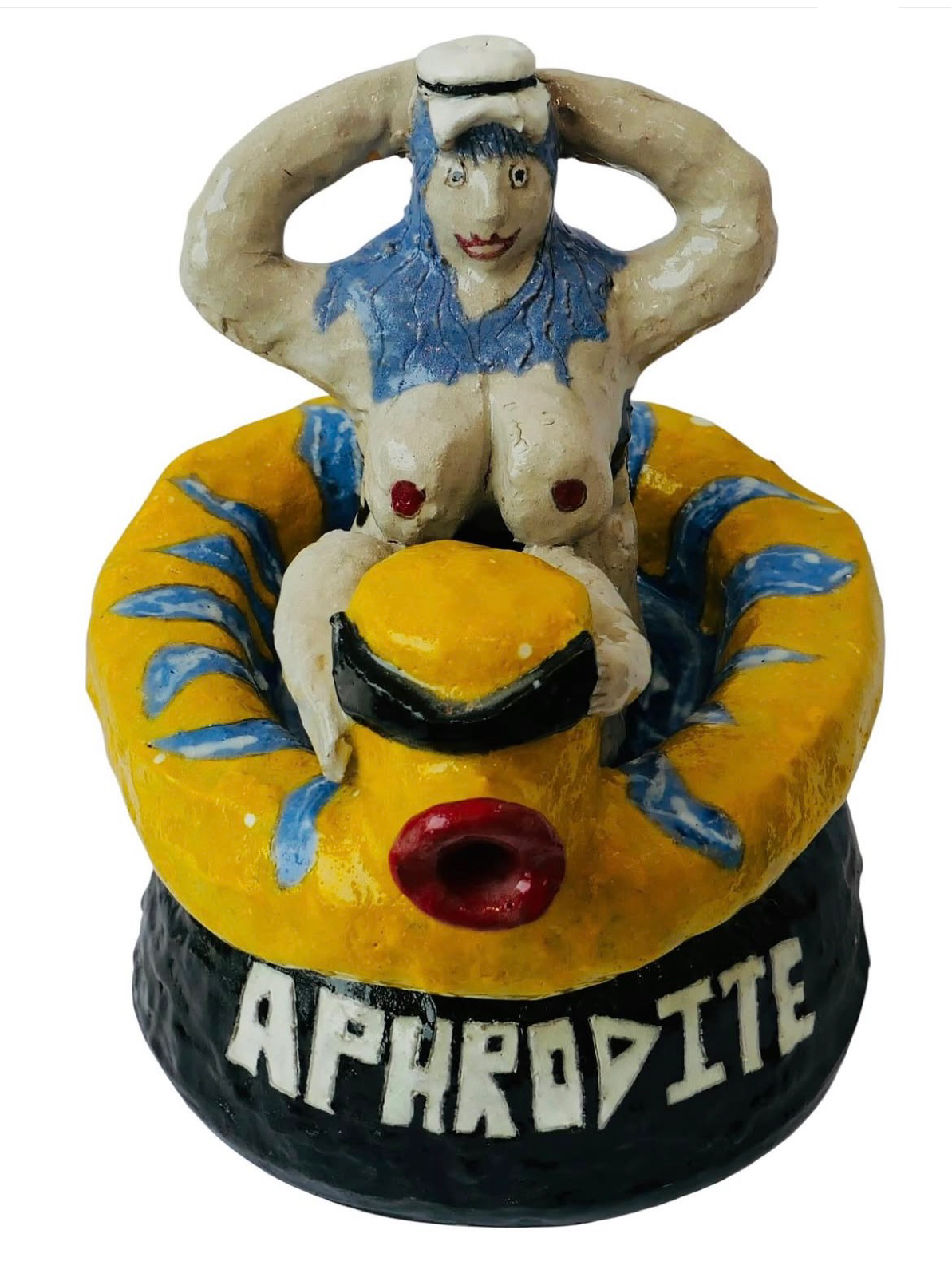
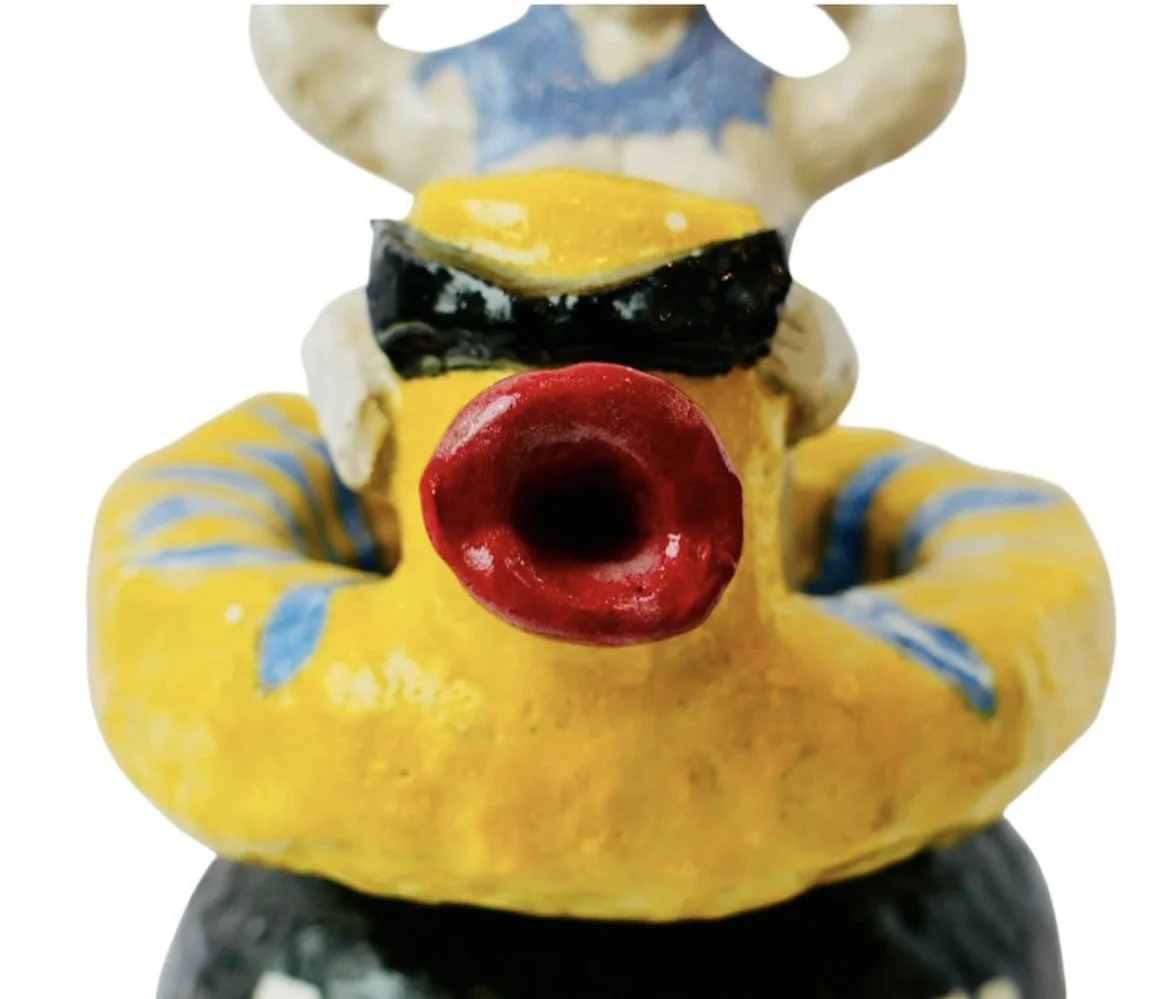
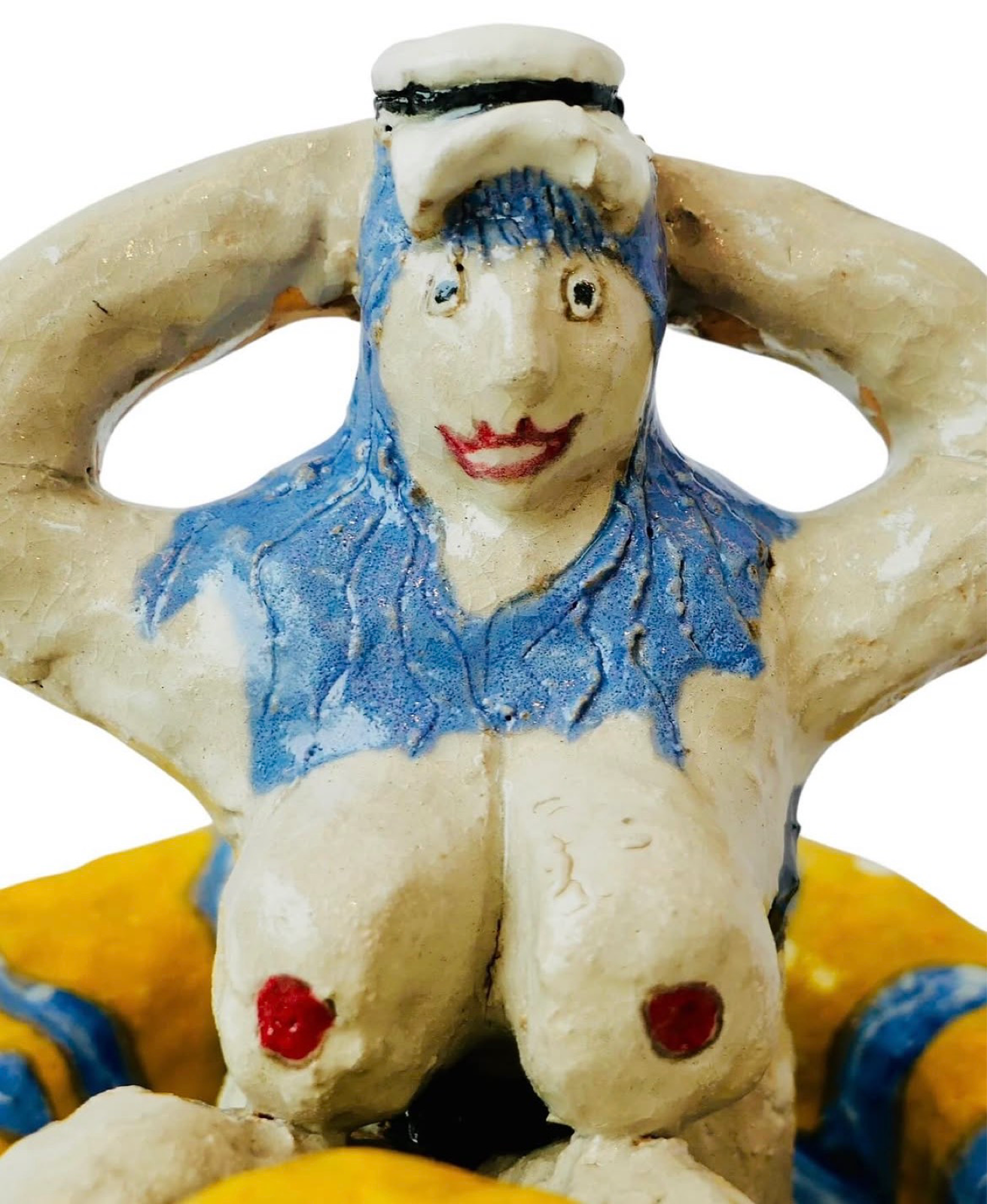

This piece was inspired by a fella at a party who spotted his ex walk through the door and immediately performed what I can only describe as a Spinal Combover. A visible shiver travelled from the base of his spine to the top of his head, folding him in on himself like a haunted deckchair. Apparently still very much in love with her, I took it upon myself to play Cupid and got them talking again. They reunited... for nearly an hour. Then they had an argument and stormed off in opposite directions.
Still…..well done me, though!
As my work centres on contemporary retellings of ancient myth, very few pieces have arrived in my mind as instantly and completely as this one. Chance encounters often trigger a strange kind of mythological déjà vu, where ancient stories suddenly reveal themselves in modern life. In this case, while my friend was midway through his Spinal Combover, the sculpture was already finished—at least in my mind's eye.
Why?
Because Aphrodite was one of the most influential powers on Olympus. While other gods ruled the sea, the sky, or the underworld, Aphrodite governed something arguably more powerful: desire. Attraction. The invisible force that pulls people together, drives them apart, and occasionally convinces them that texting their ex at 1 a.m. is a brilliant idea.
Love glue, if you will.
Actually….That's awful.
An ancient goddess who would probably feel quite at home in the modern world, Aphrodite was far more than a symbol of beauty. To the Greeks, she represented a fundamental force of nature: the attraction that fuels love, reproduction, creativity, and social connection—but also jealousy, obsession, and conflict.
The Greeks understood that Aphrodite's gifts came with side effects. She could bring harmony, fertility, and joy, yet just as easily spark heartbreak, rivalry, and catastrophe.
Remind you of anyone?
Her famous relationship with Ares, the god of war, reflects a recurring Greek theme: the uncomfortable proximity of passion and conflict. Together they embodied forces that can create, unite, divide, and destroy—often before breakfast.
Aphrodite was also more complex than modern portrayals suggest. In Sparta, she was worshipped as Aphrodite Areia, the "Warlike Aphrodite", a reminder that desire is not always gentle and beauty is not always passive.
Her importance lay in her universality. She was never the ruler of Olympus, but she represented a force that touched every god and every mortal. Through love, attraction, and desire, she influenced alliances, decisions, triumphs, disasters, and the occasional spectacularly bad romantic choice.
Making her one of the most consequential deities in Greek mythology.
And, by all accounts, an incredible friend.
With benefits.